The first section of ENGL201 is Romanticism and its Legacy, which offers an introduction to one of the major periods of creativity in English literature: the time of Romanticism. We begin with the late eighteenth century, reading selected poems by William Wordsworth (1770-1850) and William Blake (1757-1827).
We then move on to Mary Shelley’s Frankenstein (1818), a novel influenced by much the same ‘Romantic spirit’ as the poetry, although given a different, female treatment. Studying this text also provides an opportunity to think about ways in which prose fiction of the time was imbued with a ‘Romantic spirit’. Simultaneously, this course introduces students to the experience, and the implications, of poetic discourse as a crucial aspect of creative writing and reading.
The second section of ENGL201 is Reading/Writing/Editing. The aim is to give students the opportunity to improve their communicative skills in reading, writing and editing. The lectures cover composition, life writing and ‘reading for writing’.
Overall, this section of ENGL201 encourages students to relate the central practices of traditional English Studies – close reading and critical analysis – to the concerns, at once analytic, imaginative and expressive, of the practising writer.
Note: A student signing up for ENGL201 must take BOTH sections of the course, namely, Romanticism and its Legacy AND Reading/Writing/Editing.


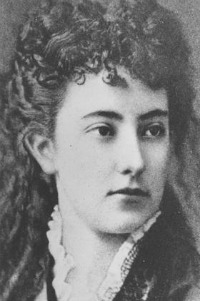 The first section of ENGL202 is Narrative in the Victorian Period. Here, we investigate basic components of narrative in relation to the characteristics of the Victorian period in which the realist novel first emerged. Students study three classic novels of the time: Emily Brontë’s Wuthering Heights, Charles Dickens’s Great Expectations and Olive Schreiner’s The Story of an African Farm.The second section of ENGL202 is Interpreting Texts. It, is at once practical, analytical and imaginative. It aims to develop your understanding of the production and reception of various written texts, from poetry, to the classic African novel Mhudi by Sol T Plaatje (1830) to the genre-busting meta-fictional short story. Overall, students will enjoy context-based encounters with concepts such as rhetorical device, character, voice, plot, and narrative self-reflexivity. They will also have selected opportunities to produce their own examples of creative writing.In this manner, students will be better placed to understand the wide-ranging methods through which literary-cultural materials are structured and patterned.Note: A student signing up for ENGL202 must take BOTH sections of the course, namely, Narrative in the Victorian Period AND Interpreting Texts.